
Photo by Sergei Starostin from Pexels: https://www.pexels.com/photo/6466141/
Apple is reportedly talking to investment bankers and semiconductor startups about possible acquisitions — a move that, on its face, sounds like routine big-tech dealmaking. It is not. For a company that turned custom silicon into one of the defining competitive advantages of the last decade, even exploring chip startup buys is a signal that AI infrastructure is a different game than AI on a phone — and that timelines, not talent alone, are forcing hard choices.
This article is not a recap of someone else’s news cycle. It is an argument about what that signal means for businesses that will never own a fab, startups racing to ship AI features, and teams in markets like the Philippines who win by integrating fast, not by designing processors.
Photo by Miguel Á. Padriñán from Pexels: https://www.pexels.com/photo/green-circuit-board-343457/
Introduction
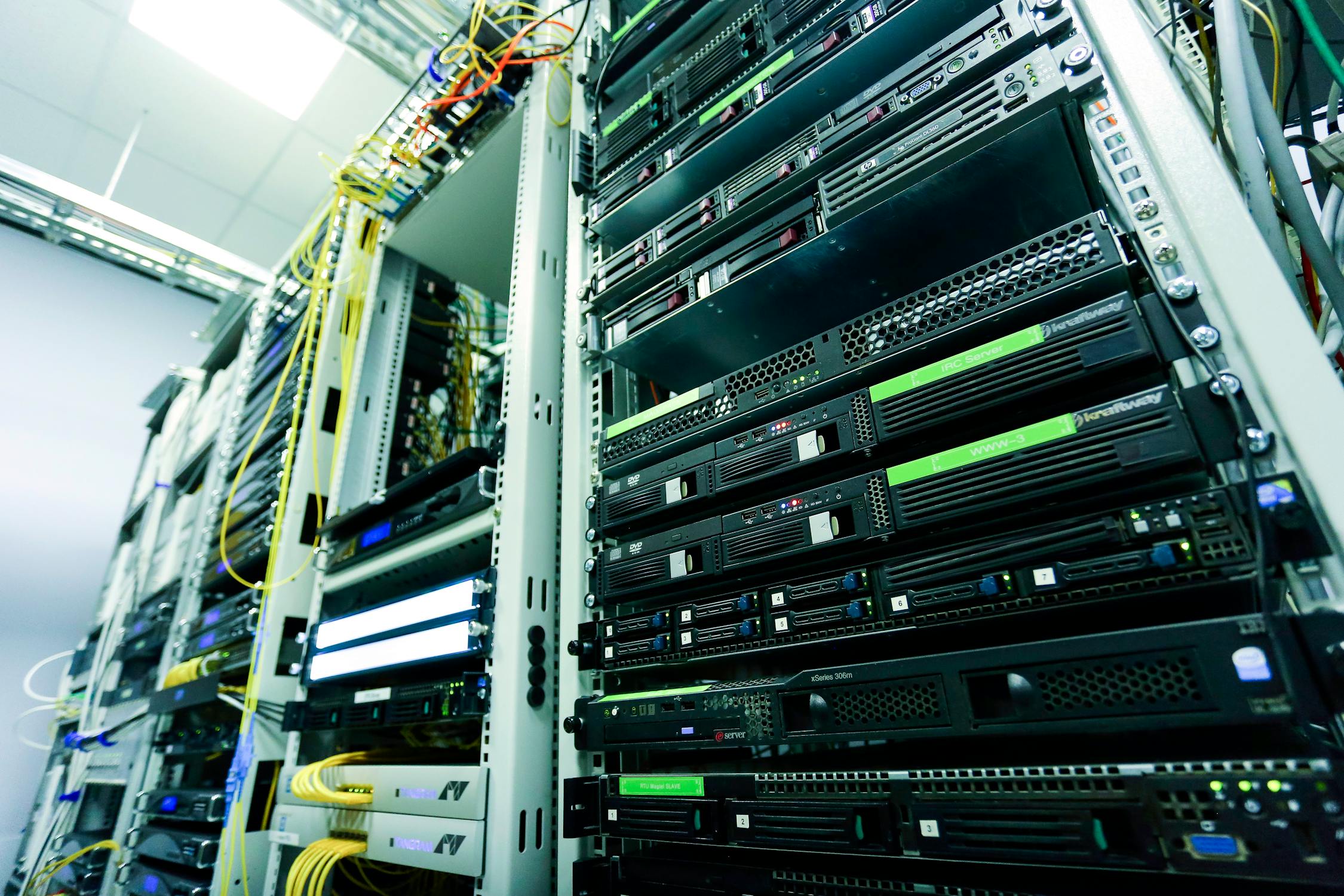
According to reporting from The Information and follow-on coverage from outlets including Engadget, 9to5Mac, and DigiTimes, Apple has held conversations with bankers and chip startups as it weighs acquisitions that could accelerate its AI server capabilities. The context matters: Apple’s in-house AI servers are said to run on M2 Ultra systems that struggle with heavier workloads, while its next dedicated server chip — reportedly codenamed Baltra — has slipped beyond a planned 2026 introduction. More demanding tasks, including work tied to a Gemini-powered Siri, are reportedly handled on Nvidia GPUs in Google Cloud.
Apple has not confirmed an acquisition strategy. Treat the reporting as directional, not definitive. Even as rumor, though, it illuminates a tension every serious AI program will feel: the silicon that makes a beautiful device is not automatically the silicon that sustains inference at scale.
Device Excellence and Datacenter Reality Are Not the Same Skill
Apple’s chip story is the envy of the industry. Since the PA Semi acquisition in 2008, Apple Silicon has delivered performance-per-watt leadership on iPhones, iPads, and Macs. That track record creates a natural assumption: if anyone can “just build” the next layer of AI hardware, it is Apple.
The reported server-side friction pushes against that assumption. Inference clusters, model routing, batching, cooling, network fabric, and failure domains at cloud scale are engineering cultures unto themselves. A team optimized for 5W–30W envelopes and single-user latency is not automatically optimized for multi-tenant GPU farms and training-adjacent fine-tuning pipelines.
That distinction is the first lesson for everyone else: do not confuse product hardware competence with AI operations competence. Your mobile app can feel magical on a tight SOC while your backend still needs a sober architecture for cost, latency, and failover.
Photo by Athena from Pexels: https://www.pexels.com/photo/black-and-gray-motherboard-2582937/
Why “Buy Talent, Not Just Transistors” Is Back in Fashion
Apple is not known for splashy M&A. Its largest deals — Beats at roughly $3 billion, Intel’s modem business around $1 billion, and more recently Q.ai at nearly $2 billion — stand out precisely because they are rare. Reports that Apple is canvassing semiconductor startups suggest a shift in urgency, not a sudden love of deal fees.
Chip startups rarely sell “a chip.” They sell teams, IP blocks, compiler stacks, packaging know-how, and years of dead ends already paid for. In an AI cycle where Nvidia, Broadcom, Google, Amazon, and Microsoft are all spending aggressively — Apple’s reported $30 billion supply arrangement with Broadcom is one recent datapoint — acquirers are buying time as much as technology.
For CFOs watching this unfold, the subtext of Apple’s reported hunt is familiar: when internal roadmaps slip, external clocks do not. Bloomberg has separately reported that a server-oriented M7 Ultra class part may not arrive until 2029, while Apple is under public pressure to show AI progress now. Whether or not every date proves exact, the directional pressure is real: platform companies are being judged on AI outcomes on quarterly horizons, but silicon rewards multi-year bets.
That is the second lesson: M&A is a schedule recovery tool. If Apple — with vast balance-sheet flexibility and deep bench strength — is reportedly willing to shop for chip companies, smaller firms should be honest about whether they are trying to invent their way out of a timeline or partner their way there.
What Most Businesses Should Actually Do
Let us be blunt: you probably should not buy a chip startup. You should steal the strategic insight instead.
Here is a practical playbook that translates Apple’s reported dilemma into decisions a mid-market company, SaaS vendor, or regional enterprise can act on this quarter:
- Separate “AI product” from “AI plumbing.” User-facing features belong in your roadmap. Training and inference infrastructure belong in an explicit capacity plan with owners, budgets, and exit ramps.
- Default to hybrid, not heroics. Use cloud GPUs for bursty or frontier-model workloads; use smaller open or distilled models on controlled infrastructure where latency and cost predictability matter. Apple’s reported reliance on Google Cloud and Nvidia for heavy lifting is not a failure — it is capital discipline.
- Buy integration speed, not fabs. Acqui-hiring a 10-person ML platform team, contracting a specialist integrator, or licensing proven model-compression tooling (reports have linked Apple to conversations with firms in that space, such as PrismML) often beats pretending you will vertically integrate silicon.
- Design for model routing now. If your architecture assumes one model forever, you will pay twice: once when it underperforms, again when you emergency-rewrite orchestration. Plan for fallbacks, eval harnesses, and cost caps up front — the same class of engineering maturity Anthropic and others now bake into production agents.
- Treat AI capex like a portfolio, not a trophy. Apple’s reported shift away from treating net cash neutrality as a formal goal is a reminder that strategic spending is back. Your version is smaller but structurally similar: reallocate from low-yield initiatives to AI only where KPIs are measurable within 90 days.
These are unglamorous choices. They are also how most winners will actually ship.

Photo by Kevin Ku from Pexels: https://www.pexels.com/photo/data-codes-through-eyeglasses-577585/
A View from Builders Outside Silicon Valley
At RP Innotech, we work with teams across the Philippines and abroad who do not have $45 billion in cash equivalents — Apple reported roughly that level as of March — and who will never negotiate fab capacity. Their edge is different: closer business context, faster iteration with users, and discipline about where not to spend.
That is why the Apple headline should land differently here. It is not “go acquire hardware.” It is respect the stack. The companies that thrive in the next phase of AI will be those that know which layer they must own:
- Own: problem definition, data rights, workflow integration, evaluation, customer trust.
- Rent: burst compute, frontier models, global CDN-scale delivery.
- Partner: specialized security, MLOps, mobile performance, industry compliance.
Filipino developers and regional startups are already strong in the own and partner columns. The worst mistake would be copying the headline of Big Tech strategy without copying the balance sheet that makes it possible.
The Deeper Shift: From Product Company to AI Operator
If the reports are directionally correct, Apple is grappling with a identity problem many incumbents share. It became the world’s most valuable product company by controlling the experience layer. AI, however, rewards operators who control the capacity layer — who can promise uptime, cost, and model refresh cadence, not just a keynote demo.
That shift explains why a firm famous for secrecy is reportedly visible in banker conversations. It also explains why Broadcom, cloud providers, and GPU vendors keep appearing in the same sentences as Apple’s AI plans. The future is hybrid by necessity.
For your organization, the question is not “Are we Apple?” The question is: Are we still pretending one team can own every layer? If yes, the market will eventually punish that fantasy the same way it punishes delayed features — quietly at first, then all at once.
Conclusion
Reports that Apple is shopping for AI chip companies are less about gossip and more about physics: AI at scale demands infrastructure Apple cannot wish into existence on the same clock as a UI release. Whether Apple closes a headline acquisition or keeps assembling capacity through suppliers and cloud partners, the takeaway for the rest of us is clearer than the deal terms:
- Building silicon and operating AI factories are related, not identical, capabilities.
- Buying startups is often how incumbents buy back years — if they can afford the premium.
- Most businesses should optimize architecture and partnerships, not fantasize about fabs.
The winners in this cycle will not be the teams with the most heroic slide decks. They will be the ones who know what to build, what to buy, and what to rent — and who change that mix without ego when the roadmap slips.
Note: This article reflects reporting and market conditions available as of July 16, 2026. Apple has not publicly confirmed acquisition plans; dates and codenames cited from third-party reports may change.
References
- Engadget — Apple is reportedly shopping for AI chip companies
- 9to5Mac — Report: Apple looking into buying chip startups to strengthen its AI infrastructure
- DigiTimes — Apple reportedly explores AI chip acquisitions as it races to strengthen its infrastructure
- MacObserver — Apple Reportedly Looking to Buy AI Chip Startups Amid Server Delays